Start with the people and the room
Choosing family photo clothes is easier when you begin with what will actually appear in the picture. Are you planning a close portrait against a cream wall, a wide photograph in the living room, or a parent-and-baby image where only the upper half of the outfit is visible?
Take a quick photograph of the room from the position you expect to use. Notice the dominant colours and patterns. If the space already contains a colourful rug and busy wallpaper, plain tops may be an easy choice. If the background is very simple, a meaningful pattern in one person's outfit can bring character.
Then ask each adult and older child what they feel comfortable wearing. A family portrait should still look like your family. Use everyone's real preferences as the starting material for the palette.
Build around one anchor outfit
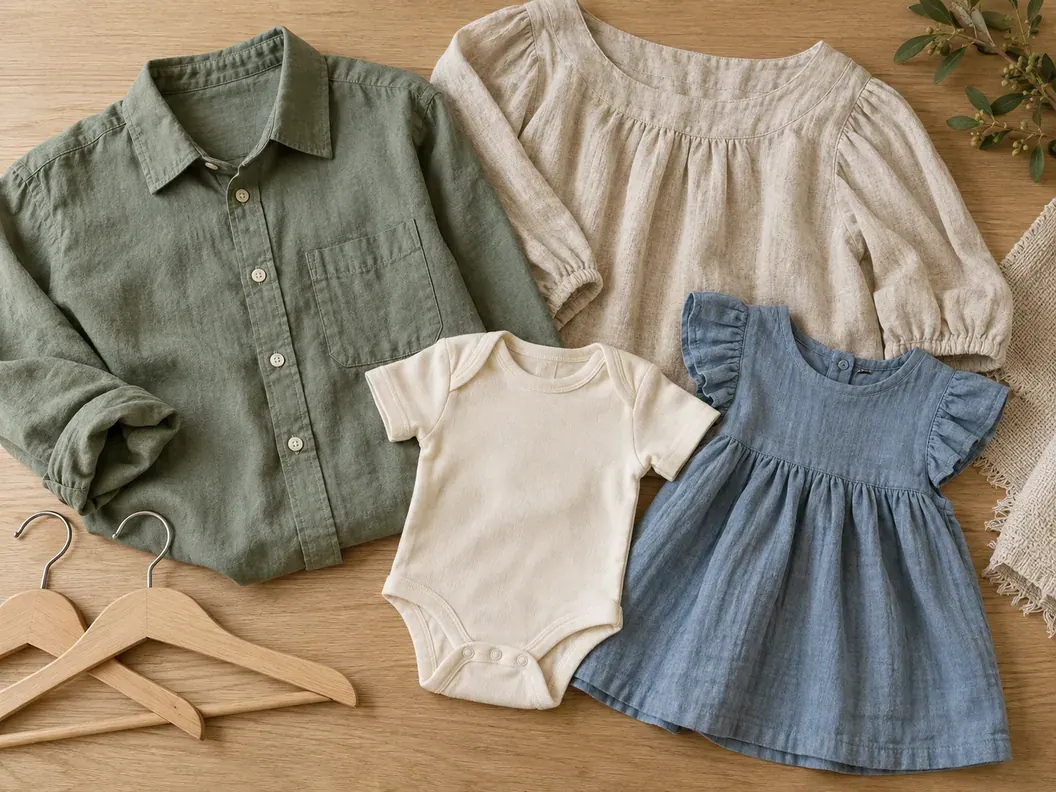
Choose the garment that matters most: perhaps a favourite dress, a baby's cream outfit, or a shirt a grandparent enjoys wearing. Lay it beside the other options in daylight. Pull two or three colours from that garment or from the room, then distribute them across the group.
You do not need equal amounts of every colour. Cream might appear on the baby and one adult, sage on another adult, and a small amount of dusty blue on an older child. The repeated neutral helps connect the people even though no two outfits match.
If the anchor garment has several colours, pick one or two to echo elsewhere. Trying to reproduce every colour can make the choices unnecessarily complicated.
Three practical colour combinations
These are examples to adapt, not requirements. Skin tone, personal taste, your home, and the exact shade of the fabric all affect what you prefer. Check the real clothes in a photograph instead of relying on a colour name from a shop listing.
For a larger family, repeat colours rather than adding a new colour for each person. Five shades of blue can work together if that is what everyone owns. A family with a strong shared cultural style can also use that as the visual thread.
Give patterns and texture a clear role
Choose where you want the eye to go. If a child has a favourite patterned dress, let it be the main pattern and keep neighbouring outfits simpler. If everyone prefers plain clothes, vary texture through a knit, cotton shirt, or softly draped fabric.
Look at the words and pictures printed on clothes too. A large logo can become a second subject in a close portrait. That might be meaningful to you, but make it a deliberate choice rather than a surprise you notice after the session.
Use a quick comparison: photograph the outfits together, then view the picture small. Ask whether the arrangement feels like a group or a set of unrelated items. Change only the piece that seems to interrupt the connection. You rarely need to restart the whole wardrobe plan.
Check clothes in the positions you will use
Try sitting, leaning towards another person, and lifting your arms before the session. Check whether a collar covers the jaw, whether sleeves ride up in a way you dislike, and whether an outfit needs constant adjustment. A comfortable seated portrait can be more useful than a standing pose chosen only to protect the clothes.
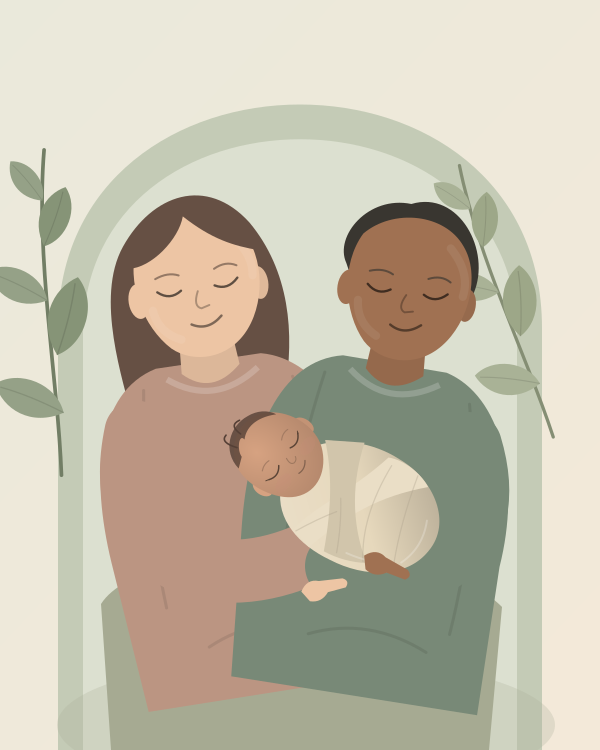
If an adult will hold a young baby, the hold comes first. NHS Inform advises supporting the baby's head and neck. Choose a neckline and sleeves that allow the adult to maintain that support naturally. Photograph the existing hold rather than moving hands out of view.
Consider what appears behind the baby's face. A plain section of an adult's top can make a clear backdrop. A necklace, scarf, or busy collar may compete with the baby's features; remove or change it if it gets in the way of a comfortable, unobstructed photograph.
Make a wardrobe plan with very few changes
For most short home sessions, one outfit per person is enough. Lay everything out before the day and photograph the group of garments once. This gives you a reference if someone changes a piece at the last moment.
Prepare a spare outfit for the baby that fits roughly the same palette. It does not need to be identical. If the cream outfit becomes unavailable, a plain pale blue one can still sit naturally beside sage and oatmeal.
For children who have a strong preference, offer two options that both fit the plan. If neither is welcome, work with their own favourite and simplify another part of the picture. A family photograph can carry personality without meeting a strict clothing formula.
Take one test portrait before gathering everyone
Ask one person to stand or sit where the group will be. Check the face, the background, and how much of the clothes is visible. Move the camera before asking the whole family to wait.
On iPhone, the current Camera guide explains tapping to set focus and adjusting exposure. Other phones have their own controls. Use a test to make sure light clothing still has visible texture and darker clothing does not disappear into the background; the exact adjustment depends on the scene.
Once everyone joins, begin with the straightforward photograph where faces are visible. Then make one relaxed variation: people looking at the baby or towards one another. Our phone-timer guide can help include the person who usually takes the pictures.
Coordinate baby and sibling portraits too
If you want a family portrait and a sibling picture from the same session, keep the children's clothing unchanged. The shared outfits will connect the images in a photo book, while different framing gives each photograph its own purpose.
Read sibling and newborn photo ideas for arrangements where an adult retains responsibility for holding the baby. For a monthly series, outfit and background planning offers a simple way to repeat colours over time.
Prepare a family collection with Baby Lovin
The family photo studio starts with four or five clear front-facing photographs. Pick source images with visible faces and an arrangement you like. Family edits can change outfits, themes, and backgrounds while retaining the original pose and identity. You can keep your everyday source photographs and consider the edited collection as another way to present the same family moment. Review current options on Photo pricing before choosing originals.
Frequently asked questions
Should everyone wear exactly the same colour?
Only if you like that look. Repeating two or three colours usually gives you more flexibility with existing clothes. Similar lightness or a shared neutral can connect outfits without making them identical.
Is white always the best choice for a baby?
No. Cream, gentle colours, and meaningful everyday clothes can all work. Take a test photograph against the actual background and choose the option that keeps the baby's face easy to see.
Can we include a favourite character shirt?
Yes. If the shirt matters to the child, it can be part of the memory. Simplify the surrounding clothes and decide whether you want that detail visible in the main portrait or in a second candid image.
Do we need special shoes for home photographs?
Look at your planned framing first. Shoes may not appear at all in a close portrait. If feet are visible, choose a comfortable approach that fits the room and the family rather than buying something solely for one picture.
Sources