Give the photograph a simple purpose
A sibling photograph can record a beginning without proving a particular kind of bond. You might want to remember how small the newborn looked beside an older child, the clothes they wore that week, or the first time you managed to get everyone into the same frame.
Choose one main photograph before starting. For example: “Both children's faces visible, with the baby safely in a parent's arms.” This is a manageable goal. A list of elaborate poses can create unnecessary pressure when the people in the photograph have different needs.
Tell the older child what will happen in concrete terms. “You can sit next to me while I hold the baby, and we will take a few pictures” gives them a clear role. They do not need to hold the newborn, perform affection, or remain still for a long session.
Let an adult control every newborn hold
The newborn's support stays with an awake adult throughout these ideas. NHS Inform advises supporting a baby's head and neck when holding them. Do not make an older child's lap or arms responsible for supporting the infant, and do not remove the adult's hands to create the appearance of an unsupported pose.
For the examples here, the holding adult sits comfortably in a stable position and the older child comes alongside. The photographer works around that arrangement. If a pose requires the adult to stretch, balance, or release support, choose another composition.
Keep decorative props out of the interaction. The relationship between the children is enough to fill the photograph. A plain wall, a simple adult top, and clothes the children already wear give you a clear starting point.
Six relaxed sibling photo ideas
1. Side by side, with a parent in the picture
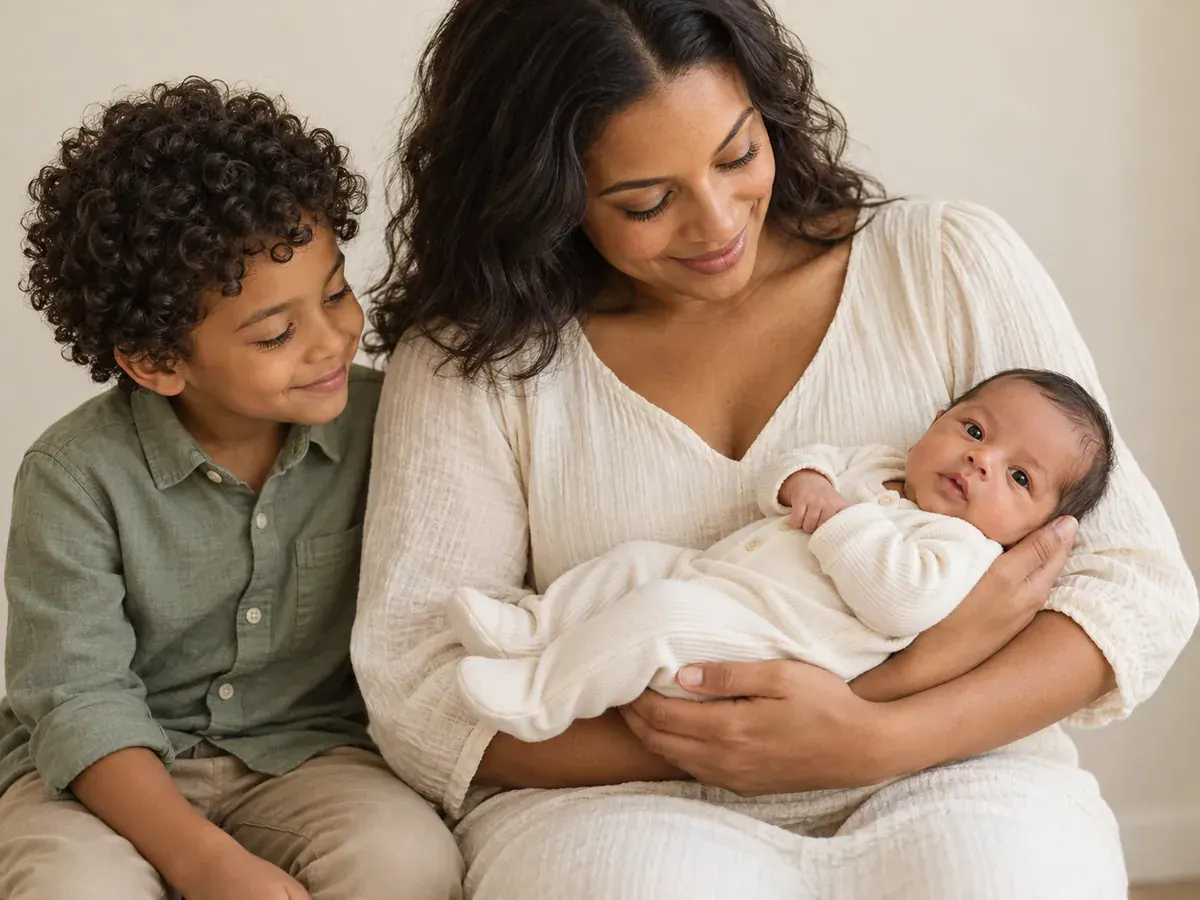
The adult cradles the awake baby with the head, neck, and body supported. The older child sits or stands next to the adult. Ask everyone who can do so comfortably to look towards the camera, and leave enough room to show the support.
This is a useful first image because faces are visible and the arrangement is easy to understand. The parent's presence is part of the family story, so there is no need to crop them out at all costs.
2. Looking at the baby together
Keep the same hold. Invite the older child to look at the baby's face, then photograph the moment without asking for a kiss or a touch. The child can stay at a distance they choose.
You might say, “What do you notice about the baby's sleeve?” A simple observation can create a natural glance. Avoid repeatedly asking the child to produce the same expression; a brief look is enough.
3. A conversation beside the holding parent
Ask the older child a familiar question while they stand or sit next to the parent. It could be about a favourite story, the colour of their clothes, or what they want to do afterwards. The newborn remains in the adult's supported hold.
Photograph both the child speaking and the parent listening. This gives the series a sense of family life even if the baby is looking away from the camera.
4. A family hands detail
Keep the newborn secure in the adult's arms. If the older child wants to participate, photograph their hand near the adult's hand with the baby's hand naturally visible. The child does not need to touch the baby, and nobody needs to reposition tiny fingers for a perfect arrangement.
Take a wider version as well as a detail. The wider image shows who is involved; the close crop can become a small companion photograph in a book.
5. The older child's own portrait
Make a photograph of the older child alone while another adult cares for the newborn. Let them choose a comfortable position or show an expression they enjoy. Place this portrait beside the newborn's picture in the finished collection.
Separate images can make an excellent sibling diptych. A shared colour or background links them without requiring both children to be ready at the same moment.
6. The full family for one frame
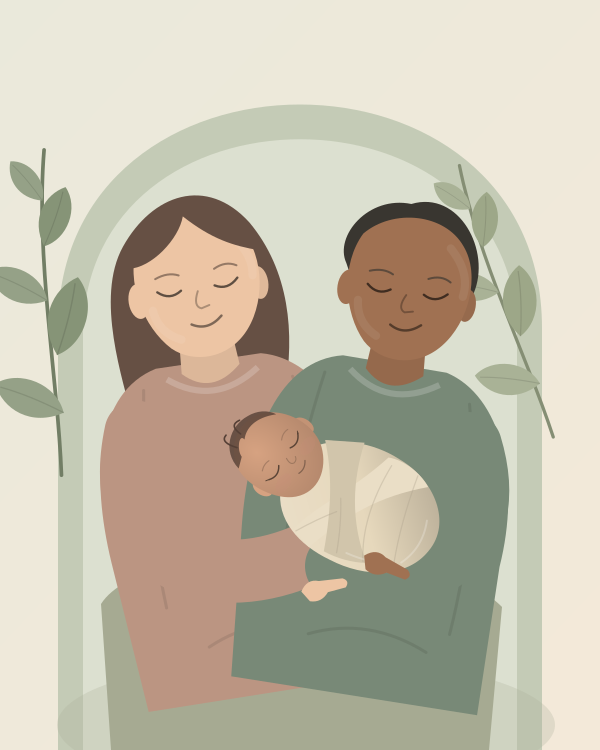
Invite the other parent or caregiver into the scene. Keep the holding position unchanged, then build the group around it. Aim for a simple photograph with faces visible before trying any candid variation.
Our family photo outfit guide can help connect the group visually with clothes already in the wardrobe. One repeated colour is usually enough to make the images feel related.
Adapt the plan to the older child's preferences
Some children want to be close; others prefer to watch first. Offer a choice between two positions that both work for the holding adult: beside the chair or beside another caregiver, for example. If neither feels right, make the individual portrait and move on.
Avoid asking a child to demonstrate love for the photograph. Looking in the same direction, standing nearby, or sharing the frame can be meaningful without a hug or kiss. A quiet expression can be as valuable as a smile.
Give an older child a small creative job away from infant care. They can choose between two plain tops, suggest which family photo to keep, or help photograph the empty room before the baby arrives. Their contribution can be real without involving responsibility for the newborn's position.
Use a short sequence and an easy stopping point
Prepare the phone and framing first. Bring the older child into place, then have the adult settle with the baby. Take the front-facing image, one looking-at-baby variation, and one wider picture. Check quickly that you have a clear photograph, then offer a break.
If the older child leaves, do not ask the holding adult to follow while maintaining a posed arrangement. Finish the shared sequence. You can capture an everyday moment another time or use the separate portraits together.
For example, a family might take three shared images in the morning and the older child's own portrait after lunch. The final album can still feel cohesive because the clothing and room are the same. There is no requirement that the images come from a continuous session.
Choose the photographs that tell the clearest story
Keep a mixture of purposes: one image where both children's faces are easy to see, one moment of interaction, and a wider family frame. Check whether anyone is hidden or cut off at an awkward point. Choose a slightly wider version when it preserves the adult's supportive hold and the relationship between people.
Save the original files and add names and dates. A small note about the older child's words or the reason for the chosen clothes can turn an attractive photograph into a specific family memory. The first-year organisation guide offers a simple system for keeping these notes with your pictures.
Prepare sibling portraits for Baby Lovin
The sibling studio asks for four or five front-facing photographs. Select clear source images with an arrangement you like. Sibling edits can change outfits, themes, and backgrounds while preserving the original pose and identity, so begin with a comfortable adult-controlled composition. For newborn-only images, follow the separate newborn preparation guide, which uses a different upload count.
Frequently asked questions
What if my older child does not want a photograph with the baby?
Respect that choice and take separate portraits. Use the same background or a related colour to connect the pictures. You can try a shared photograph on another day without treating the first attempt as a failure.
Can a toddler hold the newborn for the photograph?
Use an adult-held arrangement instead. The toddler can sit or stand alongside while an awake adult retains full support and control of the newborn. The image can show both children clearly without transferring that responsibility.
Do the children need matching outfits?
No. Repeat one colour or use clothes that sit comfortably together. The shared setting and family relationship already connect the photographs.
Can I crop the adult out afterwards?
Only if the crop still makes sense and preserves the photograph you want. There is no need to hide the adult's presence. Keep the uncropped original, and never change the physical hold just to create a cleaner crop.
Sources