Separate three different timing questions
“When should we take newborn photos?” often means three things at once: how old the baby should be, what time of day to use, and when the family will feel ready. Answering them separately makes planning much easier.
Age can matter to a photographer’s preferred working style or booking policy. Daylight matters to the appearance of the picture. Your family’s capacity matters to whether the experience feels manageable. None of those questions requires you to turn the first weeks into a deadline-driven project.
Start by deciding what you want to remember. A portrait of your baby in a parent’s arms can be made whenever that everyday cuddle fits your circumstances. A booked professional session needs a conversation with that photographer. An online editing service needs suitable source photographs and clear expectations about the finished artwork.
Choose the picture before choosing the date
Everyday newborn memories
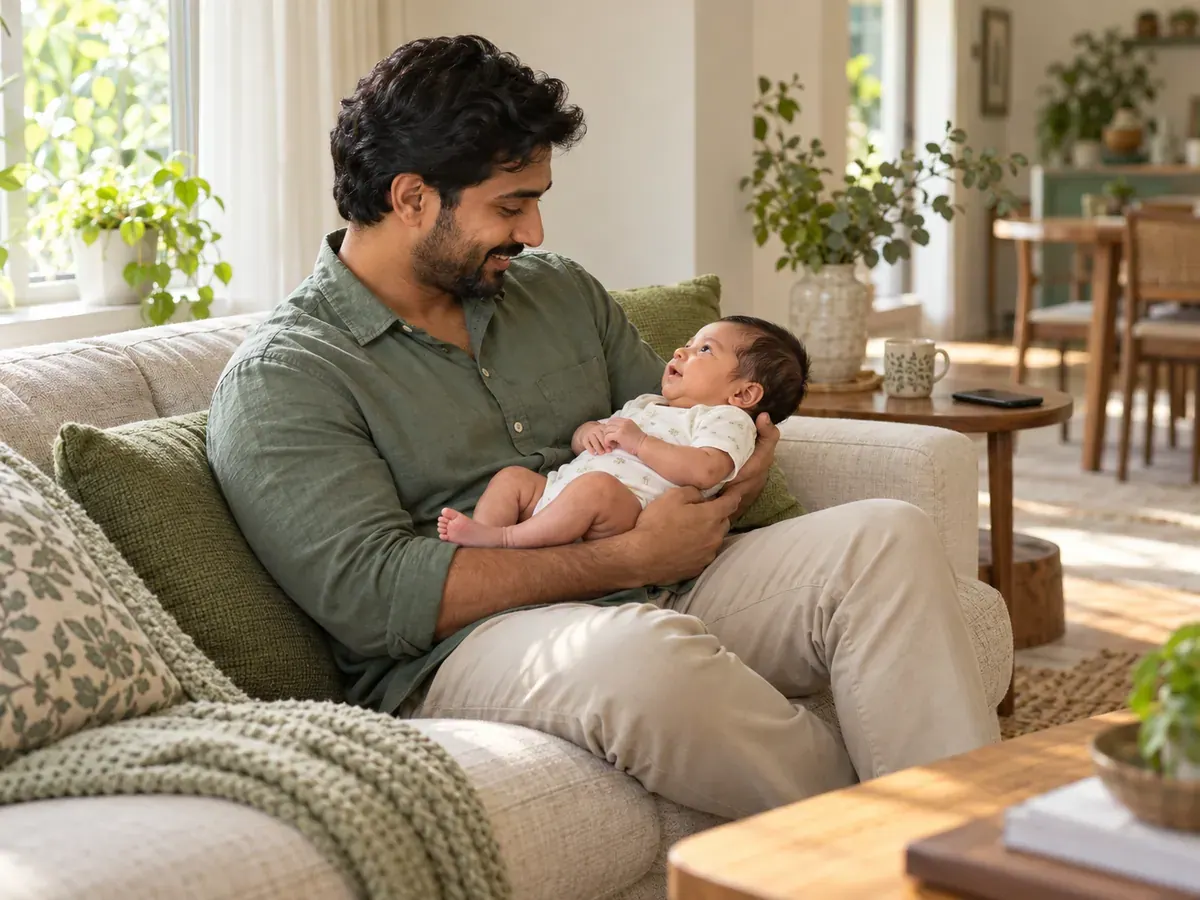
For ordinary home photographs, keep the plan small. Take a picture when you notice something you want to remember: a quiet gaze, a favourite comfortable outfit, or the way a caregiver smiles down. A collection can grow over days instead of depending on one appointment.
Consider making a short private list: one face portrait, one picture with each parent or caregiver, and one wider picture that shows home life. That list is a prompt for noticing moments, not a requirement to stage them on a particular date.
A professional portrait session
Ask the photographer what kinds of sessions they offer, how they handle changes after the birth, and what happens if the original booking no longer suits your family. Request examples of work with babies at the age yours will be. A useful answer describes their process and flexibility rather than promising an identical result for every baby.
Clarify whether the session includes relaxed family pictures, studio styling, or a mixture. Those approaches can require different preparation. If a photographer gives a preferred booking window, treat that as information about their service, not a universal medical rule about when photographs are possible.
Source photos for an online studio
For Baby Lovin’s newborn collection, plan to gather 10–15 clear photographs. They do not need to come from a single uninterrupted session. Aim for a recognisable, consistent view of your baby, with useful changes in framing and expression. Read the photo guidelines before spending time on extra setups.
Let care determine the schedule
Keep feeding and rest decisions within your normal care routine. The AAP describes responsive feeding for most healthy full-term newborns while noting that some babies need an individual plan in its first-week guide. A photography plan should fit around the advice you already follow for your baby.
If your baby needs attention just as the light becomes beautiful, put the phone down. Do not stretch a feed, wake a sleeping baby for the schedule, or try to exhaust a baby before the pictures. A planned opportunity can simply become an ordinary family moment.
For sleeping photographs, follow the AAP’s safe-sleep guidance: baby on their back, on a firm, flat approved infant sleep surface, with a clear sleep area. A sleepy expression is not worth rearranging the sleep environment.
Find your own useful time of day
Instead of choosing a supposedly perfect hour, look at the room you will actually use. Take a photograph of the same chair or plain wall at two or three convenient times. Compare the results on the same screen.
Look for a time when the subject is readable without a harsh stripe of sun across it. Notice whether one time creates a bright window behind the subject or makes the room look unusually orange. This small experiment happens before the baby is involved, so it costs no settling time.
Write down a broad opportunity, such as “the sitting-room window often looks gentle before lunch.” Keep a second option for a different room or another day. You now have choices rather than a single appointment with the weather.
Build a plan that can shrink
A useful home plan has three versions:
- The smallest version: One clear portrait during an ordinary, comfortable moment.
- The comfortable version: A portrait, a caregiver picture, and one small detail.
- The fuller version: Several different clear images for an album or online collection, made across more than one opportunity if needed.
Decide in advance that the smallest version counts. This is especially helpful when family members have different expectations. One adult may imagine a full announcement set while another is simply hoping to shower and eat. Naming the smallest useful result prevents an unspoken production schedule from taking over.
If the baby moves through several expressions, a short sequence can help you choose a moment afterward. On supported iPhones, Burst mode captures a sequence for later selection. Use it as a practical option, not a reason to keep photographing after your baby needs a break.
Example: the planned morning does not work
Suppose you planned pictures on Saturday morning. The baby needs feeding, a caregiver had a difficult night, and the room is darker than expected. Keep the clothes nearby, take care of the baby, and leave the photographs for later.
On Sunday, there is a calm awake cuddle by a different window. You take three pictures and keep one. On Tuesday, another adult helps make a wider family picture. Both belong to the same story even though neither happened on the original schedule.
If you are documenting the date, record the actual date in your album rather than implying that every photograph came from one session. The value is the memory, not a perfect production diary.
Frequently asked questions
Have I missed newborn photos if the first weeks have passed?
You can still make meaningful baby and family portraits. Ask a booked photographer about their approach for your baby’s current age, or begin a home collection now. Choose the style available to you rather than trying to recreate a younger baby’s appearance.
Is morning always better than afternoon?
No single clock time suits every home. Window direction, nearby buildings, curtains, and weather change what the room looks like. Compare your own space at convenient times and choose the softer-looking option that fits family life.
Should I wait until my baby is asleep?
Only if a sleeping photograph happens naturally within a safe sleep setup and suits your plans. Awake portraits can be expressive and personal. They are a useful alternative when you would otherwise spend the whole opportunity waiting.
What if we need to postpone a professional appointment?
Contact the photographer promptly and ask about their rescheduling process. Check the agreement for fees and availability. For any health-related concern, follow your baby’s clinician’s advice instead of letting a photography booking determine care.
Plan a manageable first attempt with the home phone photography guide, or compare professional sessions and edited phone photos before choosing a service.
If you already have suitable pictures, visit the newborn studio. The how-it-works page explains how uploaded photographs become a Baby Lovin collection.
Sources