Start with comfort and access
The right photo outfit is one you are happy for your baby to wear during an ordinary calm moment. Before thinking about a theme, check whether you can change a nappy easily and whether the neckline stays in place without fussing.
The AAP’s baby dressing guidance favours practical openings and stretchy clothing, and warns against strings and restrictive bindings. For your photo plan, translate that into a simple question: can this outfit work without repeated adjustments around the baby?
Lay out the garment before dressing time. Inspect fastenings and any decorations, and follow its care and use instructions. If something needs a clip, pin, hidden elastic, or an improvised fix to stay in place, choose a different item. A photograph is not a reason to make an unsuitable garment fit.
Choose an outfit that helps the face stand out
A small face can become visually lost when every part of the picture demands attention. Begin with one fairly simple garment. Then look at the scene as a whole: clothing, caregiver’s shirt, wall, chair, and any visible surroundings.
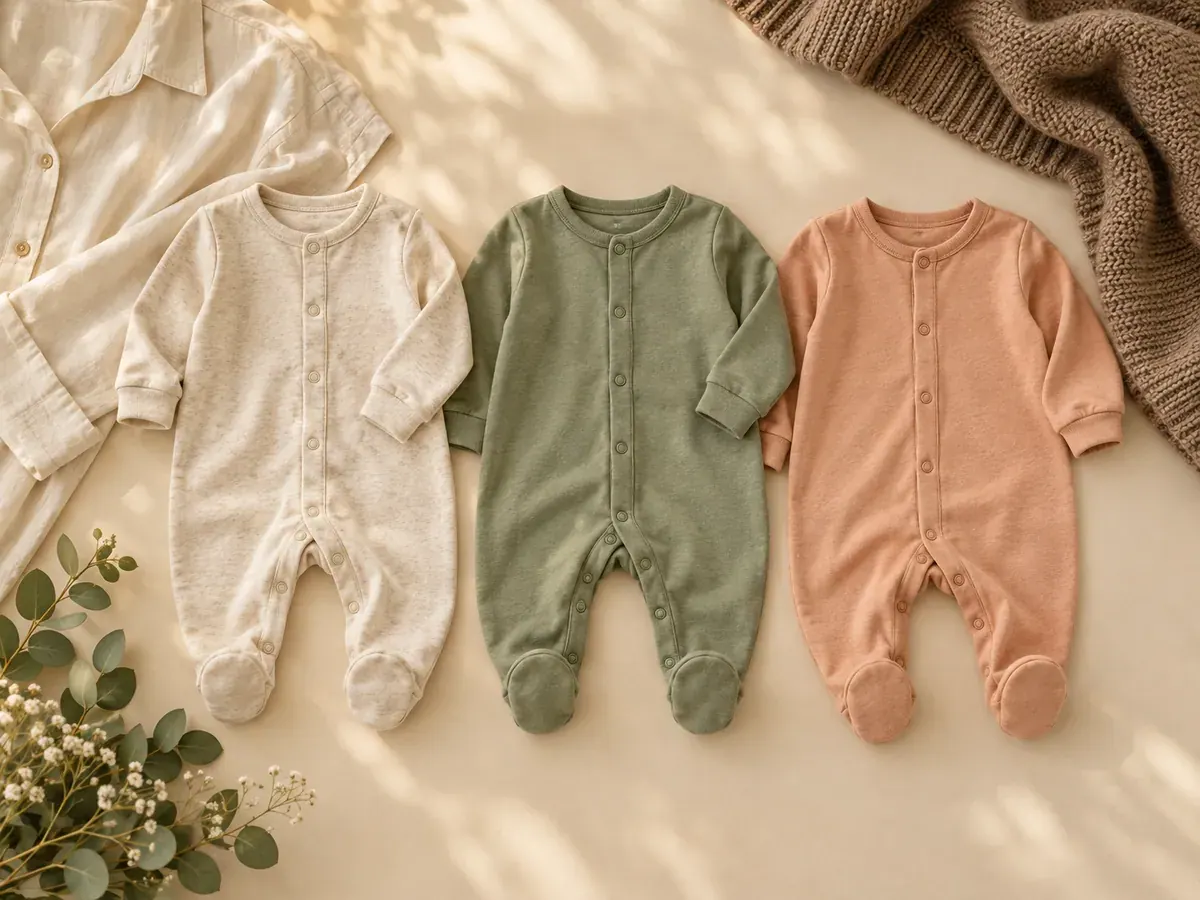
A plain sleeper against a textured adult sweater can look considered without making everything match. A fine pattern may be lovely if the surrounding clothes are quiet. A large slogan may pull your attention away from the expression. These are creative choices, so compare actual pictures instead of treating a list of forbidden colours as a rule.
Before you dress the baby, place the garment beside the caregiver’s clothing near the intended window and take a phone picture. Does one item dominate? Do they feel like part of the same scene? This flat-lay test lets you change your mind without another outfit change for the baby.
Build a small colour palette
Choose one main colour, one supporting colour, and an optional small accent. The point is to reduce decisions, not to create a professional styling assignment.
These are starting combinations, not promises that a colour suits every person. Look at the actual baby and caregivers in the actual light. If your family loves bright clothing, use a favourite colour intentionally and keep the rest of the scene simple.
Coordinate the family without buying matching sets
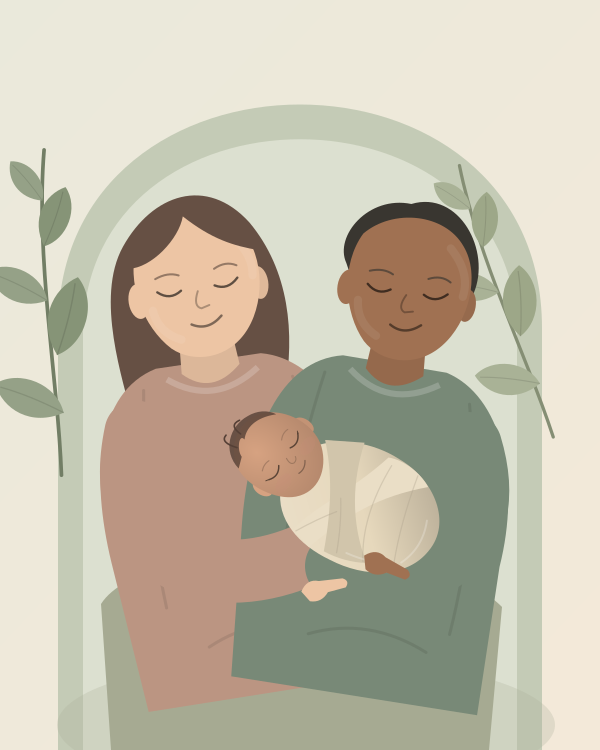
Open the wardrobes you already have. Ask each caregiver to choose one comfortable top in the general palette. Lay the choices together and remove whichever item feels unrelated. Different textures can make a coordinated picture feel more personal than identical outfits.
Pay attention to the part of an adult’s clothing that will sit closest to the baby. A large graphic across the chest may fill much of a held portrait. A comfortable plain top is an easy alternative when the goal is a clear view of the baby.
For a wider family portrait, consider balance across the group. If three people are in pale colours and one wears a dark top, decide whether you like that emphasis. You do not have to “correct” it; you simply want the final arrangement to be intentional. Our family outfit guide develops this idea for larger groups.
Keep sleep clothing decisions separate from styling wishes
If your baby is asleep, use their normal appropriate sleep clothing and approved sleep setup rather than dressing a scene around them. The AAP advises keeping the sleeping head and face uncovered, avoiding overheating, and avoiding weighted clothing; it also advises against indoor hats after the relevant newborn hospital period in its safe-sleep and tummy-time guide.
You do not need a hat, decorative bow, loose knitted wrap, or blanket to make a newborn photograph feel finished. Let the baby's face and the ordinary setting carry the picture. Photograph an heirloom or decorative accessory separately if you want to record its significance.
For a sleeping baby, keep the sleep surface clear, firm, flat, and approved for infant sleep, with the baby placed on their back. Clothing choices do not change those boundaries.
Plan one outfit and one backup
An elaborate sequence of changes can turn a small photo opportunity into a long task. Start with the outfit your baby is already comfortable wearing. Keep one spare nearby for an ordinary clothing change if needed.
A practical miniature wardrobe plan might be:
- A familiar cream sleeper for the first photographs.
- One similar spare in a colour you also like.
- A comfortable adult top that works with either option.
- A bag or drawer for the unused items so they do not clutter the scene.
If the spare becomes the main outfit, that is not a failed plan. Choose clothes that can substitute for each other, rather than a sequence where every item is necessary to complete a theme.
Example: simplifying a busy outfit combination
Suppose you planned a patterned romper, a decorative headband, a patterned blanket, and a striped adult shirt. When you photograph the laid-out clothes, your eye moves between four different focal points.
Try keeping the romper and changing the adult shirt to a plain one. Leave the decorative accessories out of the baby’s setup. Take the actual portrait during an awake supported cuddle, then photograph any meaningful keepsake separately. You have kept the garment you love while giving the face more space in the composition.
If the outfit still does not feel right, return to an everyday sleeper. Familiar clothes often carry their own memory: the small zipper, the colour you kept reaching for, or the outfit a relative gave you.
Frequently asked questions
Must newborn photo outfits be white or beige?
No. Neutral colours are convenient starting points, but personal taste matters. Try a favourite colour in a simple scene and compare it with another option. Choose the image that draws you toward the baby’s face and feels like your family.
Should I buy newborn or 0–3 month clothing for photos?
Use the brand’s measurements and your baby’s current fit rather than choosing solely by the age label. Do not buy something too small to create a fitted photographic look. Our newborn clothing size guide explains a practical way to compare options.
Can I use a family heirloom outfit?
Consider its condition, fit, fastening, and whether it works comfortably for your baby. If wearing it would require repairs or awkward adjustments, photograph the heirloom on its own and include that image beside the baby portrait in your album.
Do I need several outfits for Baby Lovin?
You do not need to stage a fashion session before uploading. Prioritise clear, natural source photos and review the current photo guidelines. The newborn collection asks for 10–15 photos; useful variety can come from framing and ordinary expressions.
Plan the rest of the scene with the window-light guide, and use the family and clothing-size guides linked above when coordinating people or choosing a fit.
Explore the catalog for visual inspiration, then visit the newborn studio when your source photos are ready. Catalog examples show creative directions rather than guaranteeing an exact theme selection.
Sources