Why the age label is only a starting point
The age printed on a baby garment is a shopping category. It is not an appointment in your calendar. Do not assume a baby will change sizes on a particular birthday or that a size called “3M” has exactly the same meaning as another brand's “0–3 months.” Open the chart attached to the product you are buying.
For a concrete example, Carter's size chart lists its newborn bodysuits at 18–21.5 inches and 6–9 pounds, with 3M at 21.5–24 inches and 9–12.5 pounds. Those are that brand's chart ranges, not universal newborn measurements or a prediction of how long a garment will fit.
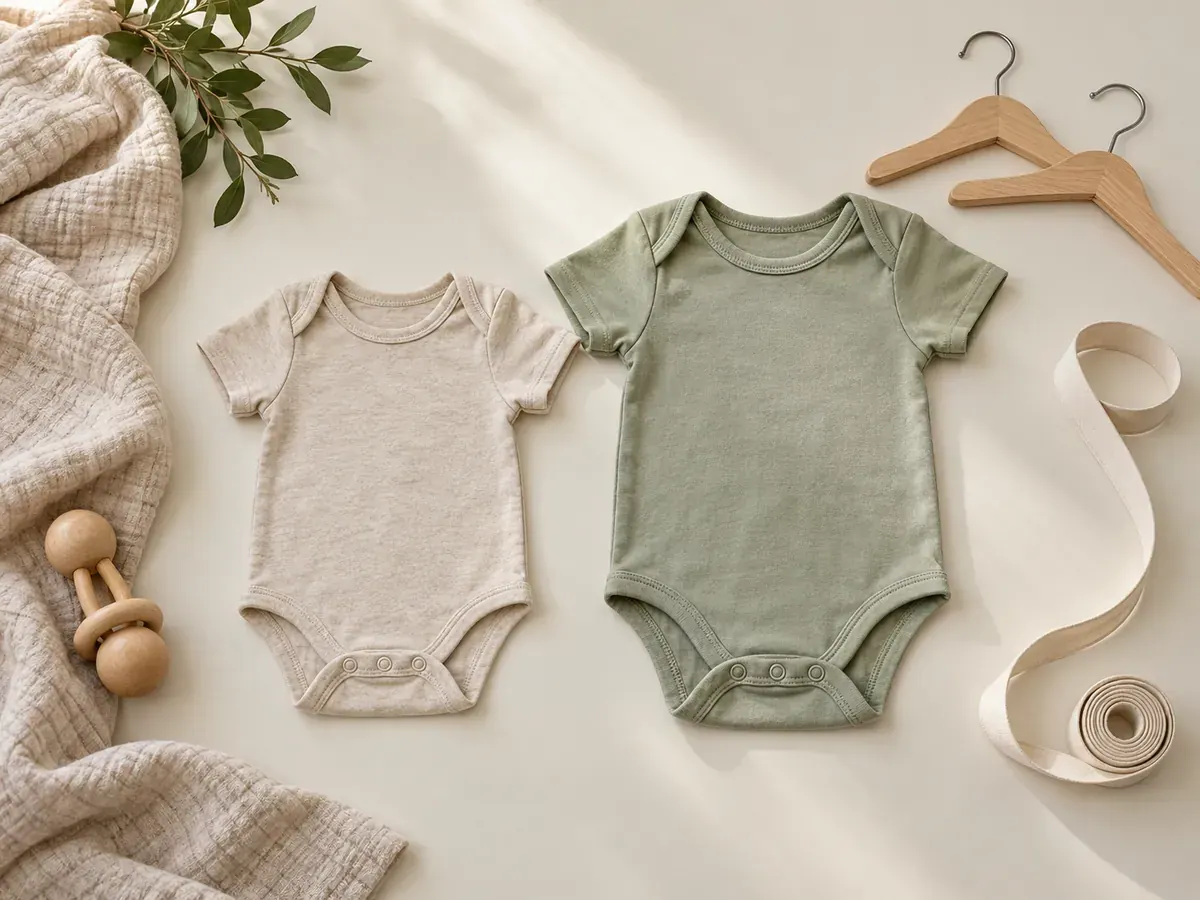
Notice the product category too. A bodysuit, a footed one-piece and an outer layer can have different construction and fit requirements. A useful shopping note records the chart and category, not just a size name remembered from a different garment.
Build a small first wardrobe with room to adjust
Start with clothing for the routines you expect to repeat. Think about dressing, changing, laundry and the temperature of the places your baby will spend time. Special occasion clothing can come after that practical base.
An illustrative plan is to have a modest group of current-size everyday pieces ready, plus a smaller group in the next suitable size. This is a purchasing strategy, not a prescribed count. A family with shared laundry may need a larger reserve than one that can wash frequently.
Do not wash, remove tags from or personalise every future-size item immediately if keeping it exchangeable matters to you. Read the retailer's terms first. Wash the clothing you will use according to its care label, then reassess the selection as you learn what works.
If you are building the whole list, our minimalist registry checklist connects clothing quantities with laundry, storage and the rest of your home setup.
Use a fitting check, not a label-only decision
Try the garment during an ordinary calm change, rather than discovering the problem just before photographs or an outing. Look for an outfit that closes comfortably, permits easy movement and does not require persistent tugging into place.
For a footed style, notice whether the construction pulls when your baby bends their legs. For a bodysuit, notice whether the fastening creates tension through the shoulders or crotch. Check cuffs, seams and the neck opening. If the fit seems wrong, choose a different size or cut; do not force a garment to work because the label suggests it should.
Follow any product-specific fit requirements, especially for sleepwear. Bigger is not automatically a better answer for every type of garment. If your baby has individual care or dressing needs, follow the guidance you have been given by their clinician.
A practical comparison sheet
The comparison works because it asks about the actual clothes. It does not give either label an automatic win.
Openings and fastenings matter as much as size
Imagine changing the outfit while seated, with only the supplies you normally use. Can you see how the garment opens? Does it require several separate pieces to stay aligned? Is there an easy way to access the diaper area?
The American Academy of Pediatrics' dressing guidance highlights accessible front or leg fastenings, stretchy fabric and avoiding ribbons or strings. Use that as a reminder to inspect the construction, rather than buying solely from the styled product photograph.
Choose details you can manage comfortably. One caregiver may prefer a zipper; another may find a particular snap arrangement easier. A well-placed fastening is valuable because of the task it makes easier, not because every family should prefer the same design.
For gifts, a simple everyday item in the requested size is often a more dependable choice than a highly specific occasion outfit. Include a gift receipt when available and leave the parents room to exchange it.
Check the fibre content, washing instructions and drying instructions on the actual product. Ask whether that care routine fits your household. A garment that needs a separate wash or unusually careful drying may be a reasonable choice for a treasured occasion, but it is a different commitment from an everyday piece.
Look at seams, appliqués and decorative layers in the product photographs. If you cannot tell how a piece is constructed, ask the seller for a close view. You do not have to infer comfort from a description such as “luxury” or “premium.”
After laundering, check the actual fit again. The garment in your drawer is the one that matters, not the measurements you remember from a listing. Keep the care instructions accessible for anyone helping with laundry.
Buying a photo outfit without creating a second wardrobe
Choose one outfit that already fits well and photograph it in the light you intend to use. A simple colour lets you judge the face and expression without a strong pattern competing for attention. Soft cream, oatmeal or muted colours are options, not rules; your family's taste should still be visible.
Bring a familiar spare if you are going out. A coordinated colour is helpful, but an exact duplicate is unnecessary unless you want one. If the first outfit gets changed, the photograph can still belong to the same collection.
Avoid buying an elaborate set solely because a sample portrait uses it. An ordinary bodysuit, a parent's arms and an uncluttered background can create a meaningful picture. See newborn photo outfits and colours for ways to plan around what you own.
A small purchase example
Imagine you receive several newborn outfits and only one in the next size. Before ordering another newborn multipack, sort what you have by garment type and season. You may discover that your immediate everyday needs are covered, while a few next-size basics would give you more flexibility.
Now imagine the opposite: you have mostly future-size outfits and nothing ready for the first routine. A small purchase in the best-fitting current size may be sensible. The right decision comes from your actual drawer, not from a general instruction to buy everything big.
Frequently asked questions
Should I buy newborn clothes or only 0–3 months?
Check the brand's chart and keep the initial purchase flexible. Having only a larger size can be inconvenient if it fits poorly, while buying a large newborn wardrobe can leave you with unused pieces.
Does 3M always mean the same thing as 0–3 months?
Do not assume so across brands. Read the chart for the exact item. The measurement range and garment category give more useful information than the shorthand alone.
How long will newborn clothes fit?
A clothing label cannot predict that for an individual baby. Buy for the present need, reassess the fit regularly, and avoid treating an expected date as a guarantee.
Do I need a special outfit for online newborn portraits?
A comfortable, well-fitting everyday outfit can work. Check the studio's photo guidance first so your purchase supports the photographs you need, rather than adding an unnecessary costume.
Plan the photographs around your baby
Explore the Baby Lovin newborn studio when you are ready to make a portrait collection. Start with clothing that fits comfortably and clear photographs of your baby; styling choices can follow from there.
Sources