Build a series you can actually keep doing
A first-year photo project works best when the starting idea is easy to repeat on an ordinary afternoon. Before buying props, decide what you want to see together at the end: twelve close portraits, a sequence of parent-and-baby pictures, or a mixture that feels like a small family diary.
Choose three constants. These might be a cream wall, the same camera orientation, and a simple outfit. Leave everything else flexible. A baby can look towards the camera one month and towards a parent the next. That variation belongs in the collection.
Use two tracks if you want both consistency and personality. The first is your monthly anchor portrait: a clear view of your baby with similar framing. The second is a story photograph: a grandparent's hand, the outfit worn on an ordinary outing, or a close-up of a curl. The anchor gives the series rhythm; the story brings back the day.
Twelve monthly ideas, with no required milestones
The suggestions below are creative prompts you can swap, repeat, or skip. They do not require a baby to sit, crawl, smile, stand, or perform at a particular age. For developmental questions, use your child's healthcare guidance; even the CDC's milestone resources are not a substitute for validated developmental screening.
A seasonal reference can live in the outfit colour or in a separate still life. There is no need to put leaves, flowers, balloons, or small objects around your baby to communicate autumn or a birthday.
Make a simple and safe setup
For held photographs, an awake adult controls the hold throughout. Arrange the camera and background before bringing the baby into the picture. When photographing sleep, NIH guidance calls for a baby on their back in a clear, firm, flat, level, approved infant sleep space.
Choose a place where you can photograph from a stable position. Do not stand on furniture or lean a phone above the baby. A clear wall behind a seated adult can give you a repeatable portrait without turning a sleep space into a studio.
Keep a short setup note on your phone: which room, which wall, roughly how far away you stood, and whether the camera was vertical or horizontal. Take a photograph of the empty setup once. Next month, this reference is often more useful than trying to remember exact measurements.
Use a five-picture monthly sequence
Start with the image you most want, while everyone is comfortable. There is no need to work through every variation if the baby needs a break.
- Take one wider view so you have room around the people.
- Take a clear front-facing portrait with the baby's face unobstructed.
- Make a second portrait with a different natural expression.
- Photograph one small detail without moving the baby into a special pose.
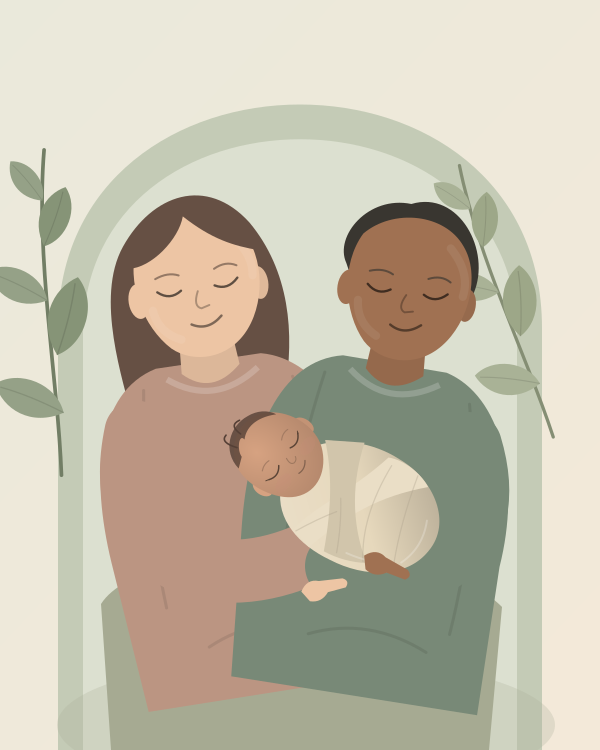
- Include the adult who has been doing the holding, feeding, or comforting.
Look at the eyes and facial edges before ending the session. If the clearest picture is the first one, keep it. A large burst of almost identical images can make choosing harder without adding much to the story.
For a more focused first session, the one-month baby photo guide offers a short shot list you can finish in stages.
Choose a visual style with room to grow
Imagine the twelve photographs as small thumbnails. Would you like quiet creams throughout, a gentle colour change each season, or a mixture of home life? Pick the answer that suits your own rooms and clothes.
For example, a family might use cream for the anchor outfit, then let a parent's shirt provide sage, dusty blue, rust, or soft pink. Another family might keep every background white and let the baby's ordinary clothes change. Both produce a recognisable series without requiring twelve new purchases.
If you want more structure, our guide to monthly outfits and backgrounds explains how to choose a small palette and avoid an elaborate reset each month.
Save dates and originals as you go
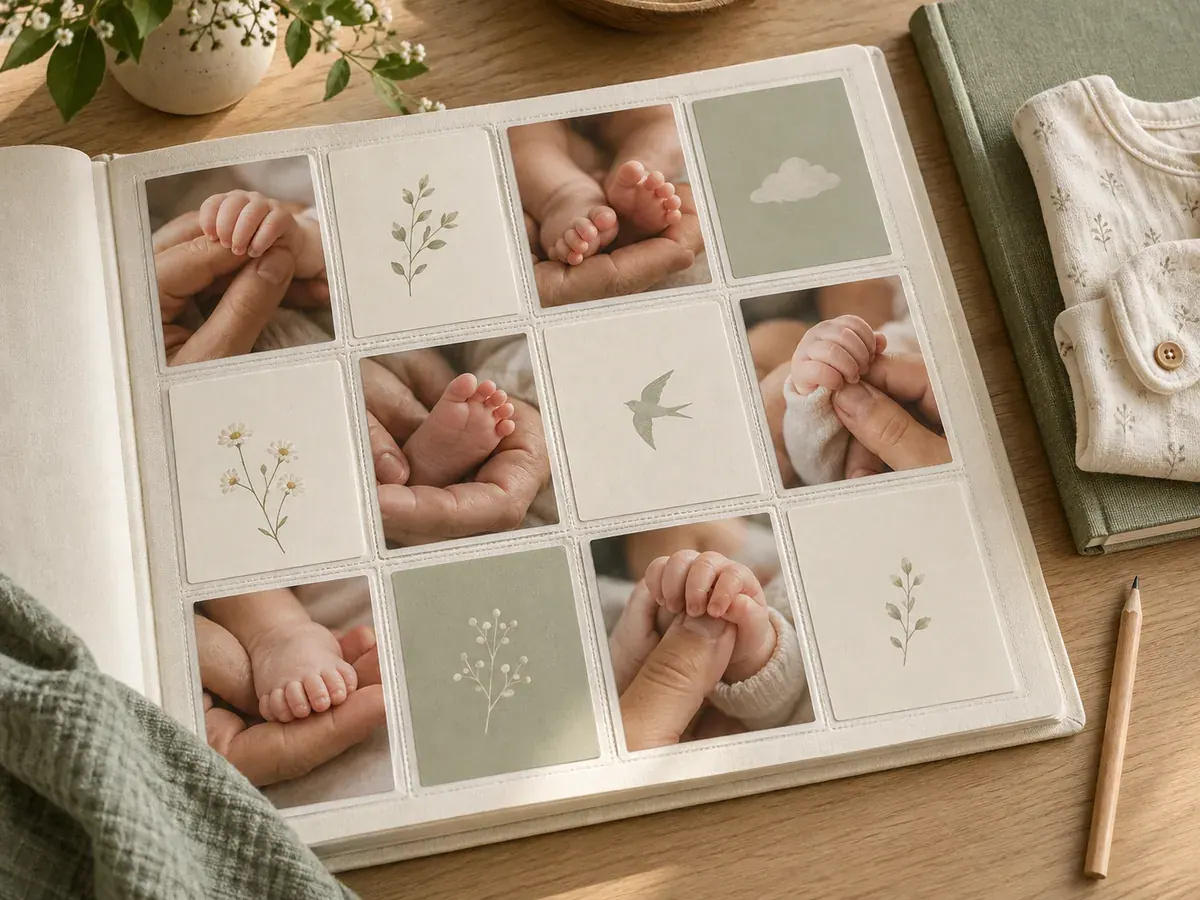
Create one album called First Year and place your final monthly favourites there. Add the actual capture date and a sentence about the day. “Seven months, late afternoon with Dad” will be more useful later than an unexplained file named final-final.
Keep the unedited original as well as your chosen version. The Library of Congress's personal archiving guidance recommends keeping high-quality versions and copies in different places. Your monthly selection is a viewing collection; it should not be the only place the photographs exist.
Bring your monthly collection to Baby Lovin
For the monthly baby studio, prepare four or five clear, front-facing photographs. The guided conversation asks about your baby's gender and month. Monthly edits can change the outfit, theme, and background while preserving the original pose and identity. The catalog provides inspiration rather than a guaranteed theme selection. Start with a source photo you already like, then use the watermarked previews to review the collection at your own pace.
Frequently asked questions
Do monthly baby photos have to be taken on the exact date?
No. Choose a nearby calm day and record the date honestly. The series is a memory project, so a photograph taken a few days later still belongs in that month's story.
What if I missed two or three months?
Use an ordinary photograph from the missing period if you have one. Otherwise leave the gap or make a seasonal spread. Avoid presenting a new photograph as an earlier moment; the real timeline is part of its meaning.
Should every monthly photograph have the same pose?
No. Repeat the framing or background when it remains practical, but adapt the pose to your baby's comfortable, supported position. A consistent colour can connect photographs even when the composition changes.
Can I make the series without month cards?
Yes. Add the month in an album caption or page design after taking the picture. This keeps labels readable and lets you use the same photograph for a print without lettering.
Sources