Decide what you want the series to look like
Before choosing a product, picture the finished collection. Do you want the baby to fill most of each image, or do you want the date or month to be part of the scene? Will you display one photograph at a time or place twelve together in a book?
A milestone blanket creates a fixed visual setting. That can be appealing if you enjoy seeing the baby change within a familiar composition. Cards offer more freedom to move from an overhead view to a parent-held portrait or a family picture.
There is also a third option: photograph your baby simply and record the month in a filename, album caption or edited copy. This keeps the original image flexible for prints and future layouts.
Compare the practical differences
The easiest option is the one you can repeat on an ordinary day. Do not choose a format that requires furniture moving, complex lighting or a second shopping trip every month unless that is a project you actively enjoy.
When a milestone blanket makes sense
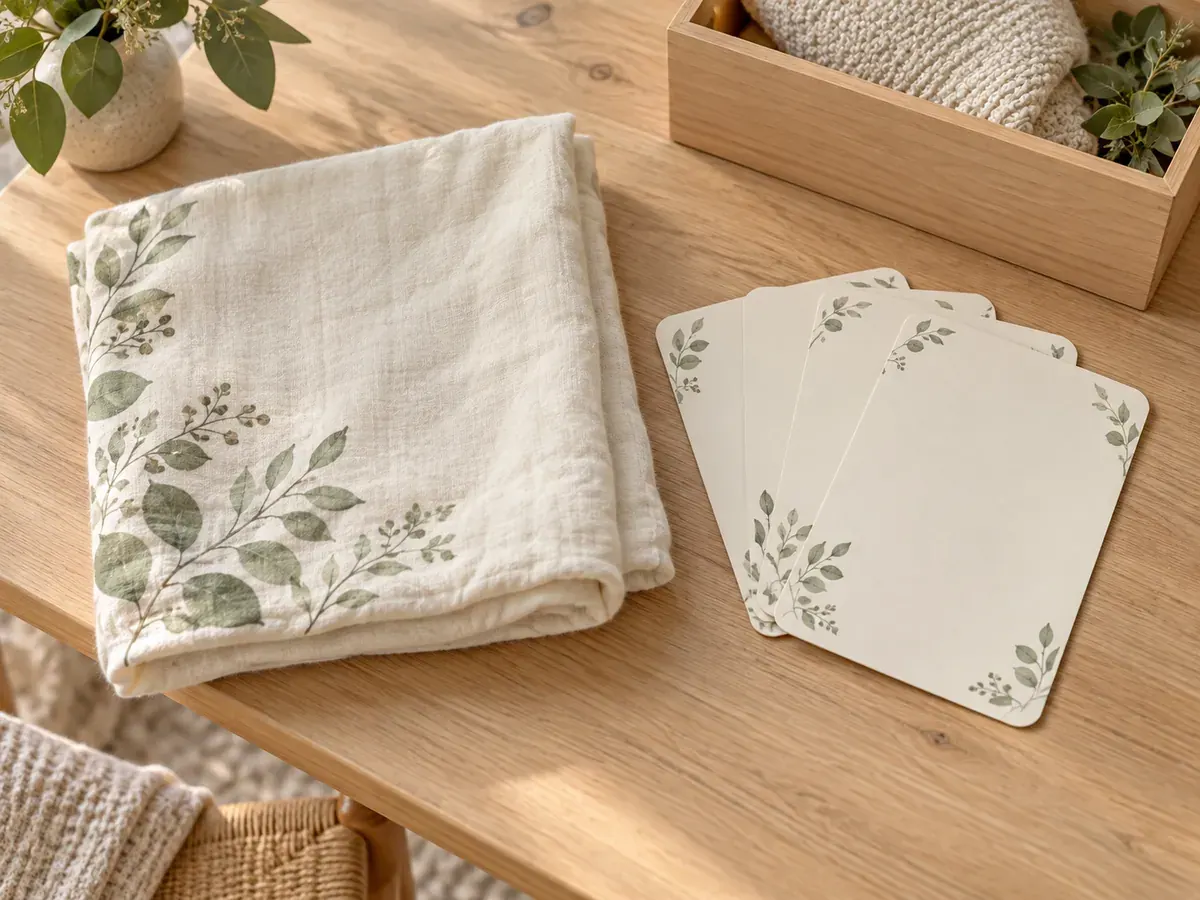
A blanket may suit you if you like a recognisable background and have somewhere to spread it smoothly for an awake, closely supervised photo. Check its actual measurements against the picture you want to take. A large design can be difficult to fit into a phone frame in a small room.
Look at the position of the printed month labels or decorative border. If the important information sits far from the centre, you may need to step back and include more of the room. A sample image taken from far above does not prove you can reproduce the same framing comfortably at home.
Read the care label. Ask whether the print and fabric are appropriate for the washing routine you expect. Check how you will fold it between sessions and whether the design still looks pleasing with ordinary creases. You are choosing a repeatable textile backdrop, so upkeep is part of the purchase.
Avoid assuming that plushness is an advantage. A photograph does not need a thick or heavily padded surface, and the product's role here is visual.
When milestone cards are easier
Cards may suit a small home, a family that travels, or parents who want to use different settings. Check the dimensions in relation to your framing. A card that looks elegant in a close product photograph may be hard to read when placed beside a parent and baby.
Consider contrast and finish. Ask to see an actual example photographed in ordinary light if the listing provides only digital mockups. Reflective finishes can be inconvenient in a setup where the card needs to face the camera; a simple design gives you more flexibility.
Choose a storage arrangement you can maintain. A numbered stack in a box is helpful only if the cards return to it. Keep the current card accessible to the adult preparing the picture, with the rest together so the next session does not begin with a search.
Cards are props for adults to arrange or hold. Do not expect a baby to grip, chew or balance one for the photograph. You can place the card well away from the baby, photograph it separately, or leave it out.
Keep the photo and sleep routines separate
Use milestone blankets only for awake, closely supervised photographs, never as infant bedding. If baby becomes sleepy, finish the picture and use their usual safe sleep space. The AAP recommends back sleeping on a firm, flat, compliant surface, with no loose bedding or other objects.
Keep cards and any separate markers out of reach. Skip heavy markers, cords, clips or small decorative pieces near the baby. A simple image does not need them. For setup decisions beyond the prop itself, read our newborn photo safety guide.
Set up the camera view and background before bringing your baby into the scene. Have a second adult help if that makes the process easier, and stop when the baby needs care. The month does not have to be recorded on an exact date for the memory to matter.
Test the design before you purchase
Make a paper rectangle approximately the size of a card, or use a plain cloth roughly the size of the blanket you are considering. Without placing a baby in the scene, take a test photograph from a position you can comfortably repeat.
Ask three questions. Can you fit the design without standing on furniture? Is the marker readable at the size you expect to display the image? Does the background take attention away from the part of the photograph you care about?
This simple rehearsal can reveal that a smaller card, a plainer design or no physical marker would work better. It is more useful than buying a popular set first and trying to rearrange the room around it.
Build consistency without making every month identical
Choose a few anchors: a similar light direction, a limited colour palette and a familiar framing style. Allow the pose, expression or family interaction to change. That gives the series continuity without forcing your baby into last month's composition.
Our monthly baby photo ideas can help you plan a collection that grows with the family. If clothing is the part you want to keep consistent, use the approach in monthly outfits and backgrounds.
Consider saving two versions from each session: a clean portrait and a milestone version. The clean image may be easier to use later in a frame, greeting card or family gallery. Keep the original file when you add text so the design decision remains reversible.
A no-purchase plan
Pick one uncluttered area with suitable natural light. Photograph the baby in a comfortable everyday outfit during a calm awake moment. Save a favourite image into a monthly folder and add a short caption about something you want to remember.
At the end of the year, choose the images that tell the story best. Missing a month does not spoil the collection. A candid family photograph can sit beside a planned portrait, and a written note can hold a memory the camera missed.
Frequently asked questions
Are milestone blankets necessary for monthly pictures?
No. They offer a consistent visual design, but a plain background or ordinary family setting can also create a coherent collection. Choose the format that you will enjoy repeating.
Can a milestone blanket be used for sleep?
Keep it as a photo prop. A decorative milestone cloth is not a substitute for your baby's approved sleep setup. Finish the session when your baby needs to sleep.
Are cards better once a baby moves more?
They can be easier to keep outside the scene or photograph separately. You can also stop using a physical prop altogether. Adapt the picture to your baby rather than trying to preserve a particular pose.
What if I forget the monthly photograph?
Take it on another day or choose a favourite image you already have. Record the actual date if you want accuracy. The collection belongs to your family and does not need a perfect schedule.
Make the photographs the lasting part
Explore the Baby Lovin monthly studio for a portrait collection built from your photographs. Choose the prop only if it helps you capture a memory you want to keep.
Sources