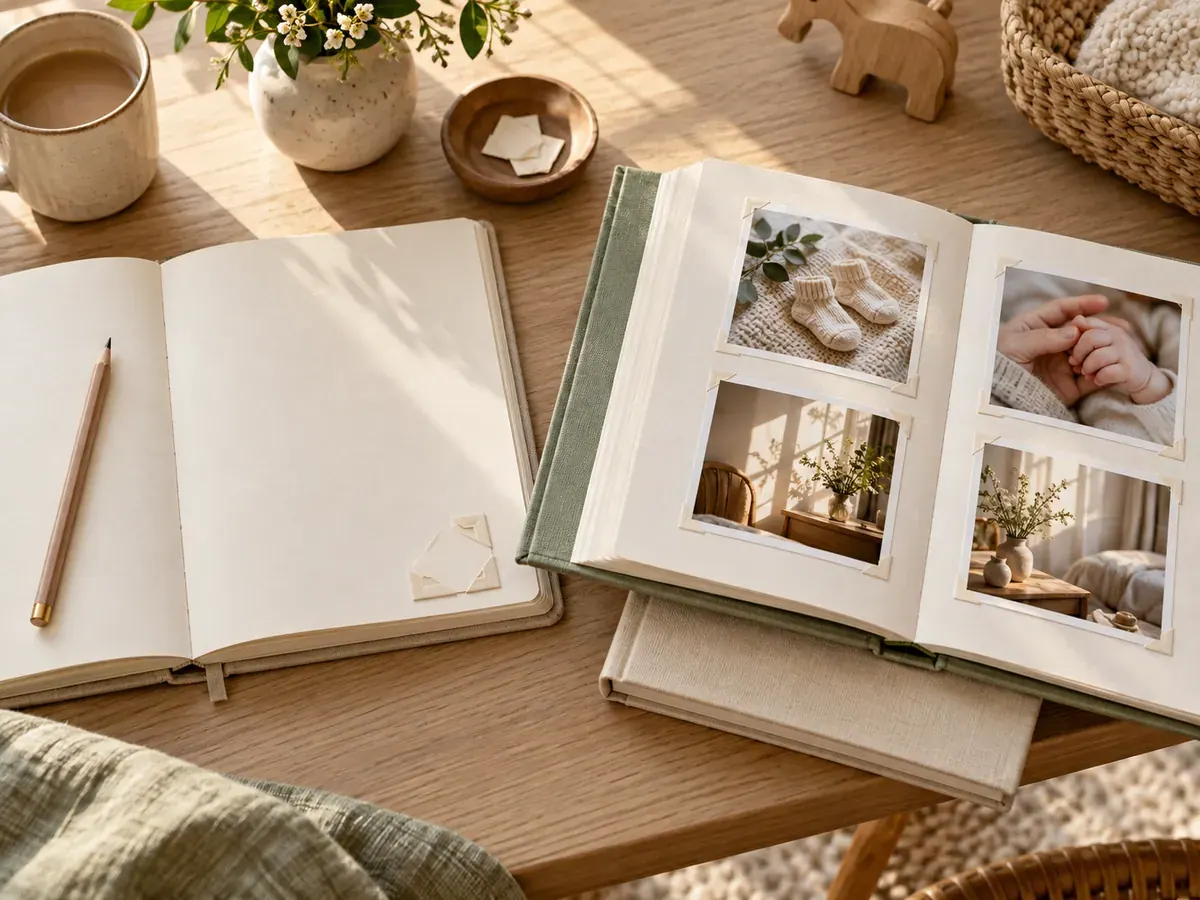
A memory book usually gives writing, prompts or collected pieces a central role. A photo book is typically designed around selected images that are printed into the pages. Product names overlap, so inspect the interior rather than relying on the title.
The important distinction is the kind of effort each one asks of you. A prompt-led book invites regular small decisions about what to write. A designed photo book asks you to gather, select and arrange images, often in a more concentrated project. A traditional album with loose prints divides the work differently again.
Think about your existing habits. Do you naturally send relatives little stories, mark favourite photographs, keep voice notes or save paper cards? Start with that behaviour and choose a format that can absorb it. A new book does not have to create an entirely new habit.
Compare the work and the result
When a memory book is the better fit
A memory book may suit you if you want to preserve words that photographs cannot show: a nickname, a grandparent's expression, a favourite song or how an ordinary afternoon felt. You can also invite another caregiver to contribute, if that is something they want to do.
Look at the prompts before purchasing. Do they fit your family structure and circumstances? Are they open enough to skip or adapt? A book that expects a particular birth story, household arrangement or sequence of events may feel less welcoming than a flexible layout.
Choose a realistic cadence. You might write when something happens rather than every week. You might keep a note on your phone and copy a few sentences into the book occasionally. These are choices, not missed obligations. Leave white space if a page does not need more words.
When a photo book is the better fit
A photo book may suit you if selecting pictures feels more enjoyable than writing, or if you want to make a finished collection after a period of time. Start with a bounded project: the first few weeks, a season, or a chosen set of family moments.
Before paying for a design, examine the provider's page limit, image upload process, crop controls and proofing options. Check whether you can save a draft, how account access works, and what is required to order additional copies. These features vary, so verify the exact service rather than assuming every photo-book platform behaves alike.
Keep captions short if that makes the project easier. Names, a place and a sentence about the moment may be enough. Ask family members before including sensitive details or photographs they would prefer to keep private.
The hybrid option can stay small
A hybrid does not have to mean completing two full books. You could save three short notes each month and combine them with a small selection of photographs later. Or keep a simple journal now and create one compact photo book from the year's favourites.
A loose-print album offers another route: choose a few prints, place them in suitable pages and add captions separately. If you are storing original photographs, the Library of Congress recommends photo-safe housing and warns against sticky self-adhesive album pages. Material information matters more than a decorative “archival” label without supporting detail.
The National Archives also advises against overstuffing albums. That is a useful reason to choose a limited collection and keep bulky mementos in a separate suitable container.
Try a one-week experiment before buying
Use materials you already have to test the process. For a memory book, write a short paragraph about an ordinary day on plain paper. For a photo book, choose five pictures and arrange them into a simple sequence in a folder. Add one caption to each if you want.
Notice which task you enjoyed and which you postponed. Did writing help you remember details? Did choosing only five photographs feel satisfying or frustrating? Would a less structured format make the difficult part easier?
A manageable first-year structure
Here is an original structure you can adapt for either format:
- People: A few photographs or notes about the people who are part of the baby's everyday world.
- Home: Small details that establish this stage of family life, from a favourite chair to the view from a window.
- Changes: A selected sequence showing how your baby and family routines changed.
- Ordinary moments: A walk, a sleepy parent smile, a sibling interaction or a familiar song.
- A letter: One page addressed to your child from this point in time.
This structure does not require an image from every month. It can include a missed photograph described in words or a candid image that matters more than a formally planned portrait.
To make selection easier, start with our first-year photo organisation guide. If you plan loose prints or a frame alongside the book, consult the print size and resolution guide before choosing the layout.
Decide the period covered, approximate page count and the date when you will make the final selection. Give yourself a way to close the project even if some captions are missing. A short book can be complete because it tells one clear story.
Review a proof carefully. Check names, dates, spelling, image order, crops and anything near the binding or page edges. Ask whether an image still works at the displayed size. A pleasing phone thumbnail may not make the same composition on a full page, so inspect the provider's preview and specifications.
Keep your original digital photographs separately from the book project. If the provider offers a downloadable design or proof, check what you may save and whether you want a copy for your records. A printed collection is a way to enjoy the pictures, not your entire file-storage plan.
Frequently asked questions
Do I need both a baby memory book and a photo book?
No. Choose one format first, or create a small hybrid only if it makes the process easier. Two unfinished projects do not preserve more memories than one collection you enjoy using.
Is it too late to start after the first year?
You can start whenever you want. Use the photographs, notes and memories you have, and label uncertain dates honestly. The book can describe a period of life without pretending it was recorded day by day.
What if I dislike the prompts in a memory book?
Look for a more open layout, a blank journal or a loose-print album. You are allowed to choose a format that fits your family rather than filling sections that do not belong to your story.
Can edited portraits go beside candid phone photographs?
Yes. Choose a layout that gives each image a clear place, and keep captions honest about the memory. A collection can contain different visual styles without needing every photograph to match.
Start with the images you love
Explore the Baby Lovin monthly studio if you want an edited portrait collection to include in your family's story. You can also browse frame options for a favourite photograph that deserves a place outside the book.
Sources